Almanac · Meteor showers
Geminids 2025
The Geminids peaked on Sun 14 Dec 2025 at 07:30 UTC, when the Earth crossed the thick of the dust from 3200 Phaethon. The Moon was waning crescent, 27% lit. The next peak is the Geminids 2026.
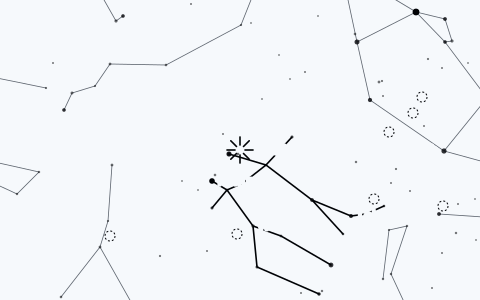
- Peak Solar longitude 262.2°
- Moon at peak 27% lit Waning Crescent
- Radiant 07h 28m, +32° 24′ Never rises south of 57.6°S
- Best rate ZHR 150 About 93 an hour at best, from 30°N
Latitude by latitude, the night of 13–14 Dec
The best hour of the night nearest the peak at each latitude: when the radiant gives the most meteors while the sky is dark, how high it stands then, and how many an hour you would count from a suburban sky (Bortle 5) with that hour’s Moon; a dark site shows more. Times are local solar time; north of 57.6°N the radiant never sets.
| Latitude | Best hour | Radiant | Moon | Meteors an hour |
|---|---|---|---|---|
| 60°N | 01:58 | 62° up | Down | About 82 an hour |
| 45°N | 01:55 | 77° up | Down | About 91 an hour |
| 30°N | 01:46 | 87° up | Down | About 93 an hour |
| 15°N | 01:38 | 72° up | Down | About 88 an hour |
| 0° | 01:23 | 57° up | Down | About 78 an hour |
| 15°S | 01:54 | 43° up | Up, 29% lit | About 62 an hour |
| 30°S | 01:52 | 28° up | Up, 29% lit | About 43 an hour |
| 45°S | 01:33 | 12° up | Up, 29% lit | About 20 an hour |
Meteor shower The shower
- Zenithal hourly rate at the peak: 150. That is the count for one observer under a perfect sky with the radiant overhead; the table above is what the sky actually gives.
- Parent body: 3200 Phaethon.
- Meteors meet the air at 35 km/s.
- Population index 2.6: each magnitude fainter holds that many times more meteors, which is what moonlight and city light take away.
How we worked it out: the peak is the instant the Sun reaches solar longitude 262.2° (J2000), the shower’s maximum in the International Meteor Organization’s Meteor Shower Calendar, found from Meeus’s solar theory; maxima are broad and wander by hours from year to year. The Moon is Meeus’s lunar theory, the one the map draws, checked against the U.S. Naval Observatory. Each latitude is worked at Greenwich’s longitude for the night nearest the peak, sampled every 10 minutes, and the rate is the IMO’s ZHR turned back into what one observer counts: ZHR × sin(radiant altitude) × r(limiting magnitude − 6.5), with the limiting magnitude the map’s own for that sky and Moon.
- International Meteor Organization, Meteor Shower Calendar (J. Rendtel): each maximum’s solar longitude, ZHR, population index and radiant
- J. Meeus, Astronomical Algorithms, ch. 25 (the Sun) and ch. 47–48 (the Moon), as the map draws them
- U.S. Naval Observatory, Astronomical Applications: the Moon’s illuminated fraction, which the tests hold these to